
Discover Taoism’s Inner Smile: How to Turn Stress into Vitality
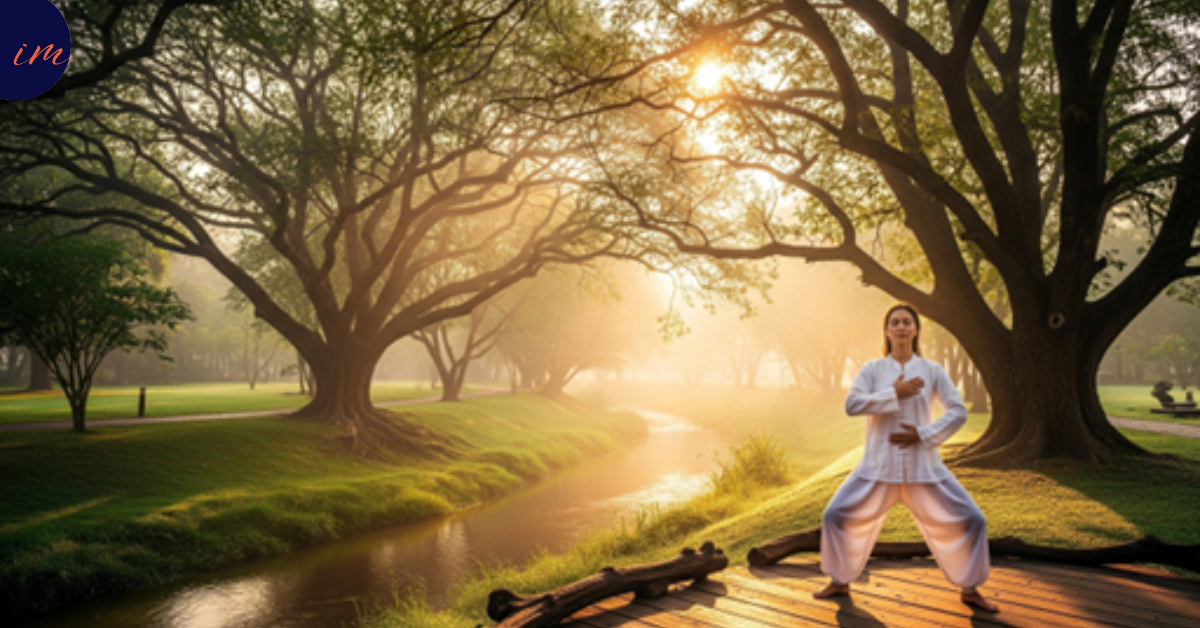
Learn how Taoist wisdom, from balancing Yin and Yang to smiling into your organs, helps you dissolve emotional pressure, heal tension, and live in greater harmony with yourself, others, and nature.
Taoism, as shared by Master Mantak Chia in this teaching, emerges as a living art of aligning the human being with heaven, nature, and the rhythms of life.
The way of Tao and Yin–Yang
Master Chia presents Tao practice as the interplay of three systems: how heaven works, how nature works, and how human beings can live in harmony with both and with each other. At the heart of this vision lies the concept of Yin–Yang, the dynamic play of opposite yet complementary forces such as heaven and earth, light and dark, positive and negative.
Instead of chasing the ideal of being “absolutely good,” Taoism focuses on balance, recognising that negative emotions grow quickly while positive qualities need conscious cultivation. Peace, in this sense, is not perfection but a state in which everyone has enough, feels more equal, and can coexist without inner or outer conflict.
Knowing yourself through inner happiness
For Master Chia, the first step on the Taoist path is to “turn into yourself” and learn how to make yourself happy and healthy from within, rather than relying on shifting external conditions. Health is treated as a central spiritual practice, not a side issue, because balanced organs and calm emotions become the foundation for meditation, clarity, and longevity.
This inner work begins with observing emotional patterns: noticing when anger, frustration, sadness or depression are taking over, and responding not with suppression but with specific Taoist methods that transform raw emotional energy into more refined states. In this approach, learning how to love yourself — including your body and organs — is a practical discipline, not a vague self-help slogan.
Inner Smile and Six Healing Sounds
The Inner Smile is introduced as a daily practice of gently smiling inwardly to your organs, activating dozens of facial and scalp muscles and, in the process, stimulating the brain and nervous system. Even when you do not feel happy, you can choose to smile softly inside; over time this dissolves accumulated tension and helps you face life’s pressures with more ease. Modern descriptions of the method emphasise directing gratitude and joy toward each organ, helping to clear “low-grade” emotional energy before it becomes illness.
The Six Healing Sounds complement the Inner Smile by using specific vocal tones associated with the five major organs; in Taoist theory, a healthy organ vibrates with a distinct sound, while a sick organ resonates differently. By learning and practising the “right” sounds, practitioners seek to resonate healing frequencies into the organs, cool excessive heat, and rebalance emotional states such as anger (liver), fear (kidneys), or worry (spleen). Together, these practices form a simple but structured toolkit for emotional hygiene and energy cultivation.
Creating cycle vs conflict cycle
Master Chia describes two energetic patterns that play out both inside the body and in relationships: a creating cycle, where each element and organ supports the next, and a conflict cycle, where energies clash and drain each other. When you smile to your organs in sequence, you reinforce the creating cycle, allowing each part of you to “help” the others rather than compete for resources.
If you neglect this inner work, conflict becomes the default — first as inner self-conflict, then as tension in families, workplaces, and society at large. Smiling into areas of pressure, stress and negative emotion is presented as a way of dissolving conflict from the inside, so that outer situations can be handled with more clarity and less reactivity.
Tao Garden: a living Taoist environment
The teaching is filmed at Tao Garden, Master Chia’s retreat centre in northern Thailand, about 24 kilometres from the city of Chiang Mai, designed as a haven of “good air, good water and good Qi.” The property spans roughly 35–50 acres, with many large, old trees and flowing water, echoing Taoist feng shui principles of “wind and water” that support vitality and a rich energy field.
Tao Garden functions as both a health spa and a spiritual retreat, offering Taoist-based therapies, qigong, and Inner Alchemy training, alongside organic food and space for rest. Guests can attend seasonal retreats — such as the Summer Retreat programmes in 2025 that include Inner Alchemy, Chi Nei Tsang organ massage, Fusion of the Five Elements, Cosmic Healing, and Sexual Alchemy for individuals and couples — either in person or via live online sessions with lifetime access to recordings.
Sexual Alchemy and modern life
Within this wider Taoist framework, Master Chia places strong emphasis on Sexual Alchemy, teaching men and women to cultivate, circulate and refine sexual energy (Jing) rather than depleting it. Men are offered tools such as Taoist Sexual Kung Fu, the Power Lock and the Big Draw to develop control, preserve vitality, and potentially experience non-ejaculatory or multi-orgasmic states, while women learn practices like Ovarian Breathing, Jade Egg training and Breast Massage to build, protect and uplift feminine energy.
These methods are framed as pathways to longevity, intimacy and spiritual growth, integrated with daily qigong, Inner Smile, Healing Sounds and Microcosmic Orbit practice. Rather than separating sexuality from spirituality, this lineage presents them as different expressions of the same life force that, when consciously refined, can support emotional healing, creativity and a more balanced life.
In the end, the invitation is simple yet demanding: are you willing to turn inward, smile to your own organs, and experiment with living from balance rather than from constant emotional conflict?
Source: The Tao Explained by Mantak Chia