
AI oversight roles are replacing the prompt writer myth
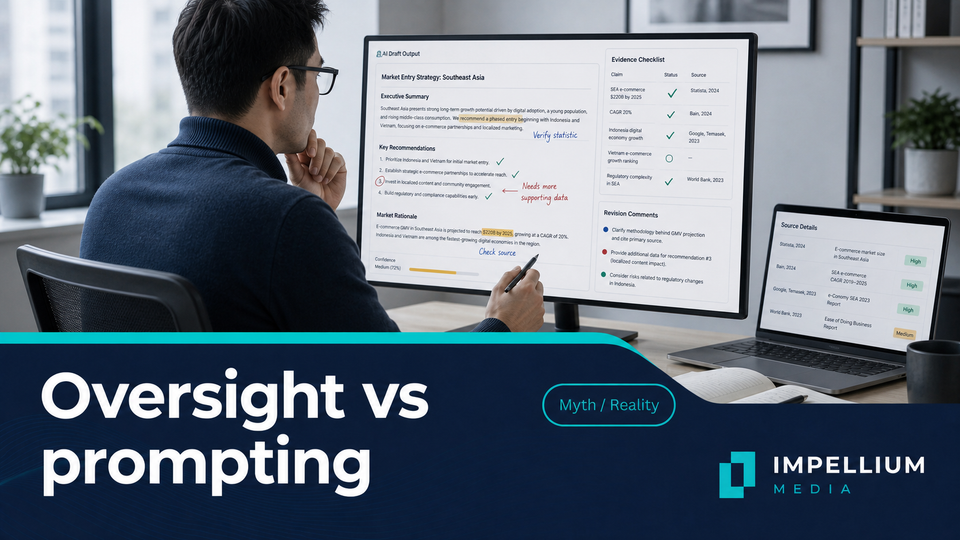
Many believe that prompt writing and phrasing instructions well is the key skill in AI-supported workflows. However, a World Economic Forum piece by Nexgen Japan describes two roles taking shape as AI absorbs more of the execution layer. Neither is built around prompting.
The "AI work architect" outlines the problem, scope, constraints, and risks. It also outlines the handoffs and escalations. Meanwhile, the "AI steward" kicks in after execution, validating outputs against existing knowledge and reality. It then decides whether to accept, modify, reject, or escalate. Both roles rely on judgement, framing the problem correctly, and knowing when to intervene.
If you're building AI capability in your own practice or team, the article suggests that prompt engineering is not the durable skill. While valuable, it plateaus fast as tooling improves. What doesn't is your critical thinking, the ability to set constraints, and to judge output well enough to know when it's safe to ship or needs revision. That's the premium skill as execution gets cheaper.
Share this with someone still convinced that better prompting is the whole game.