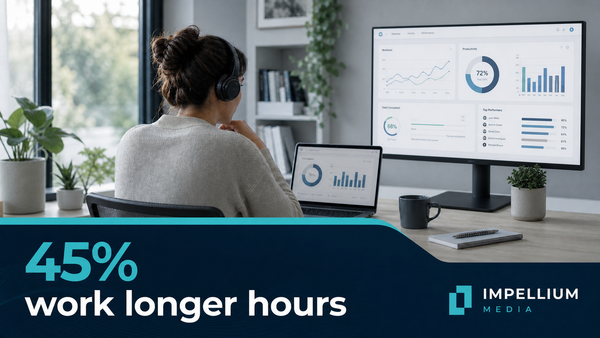
Productivity gains are real. The engagement crisis is the problem.
AI users report the highest productivity gains in 2026 workplace data. Yet global engagement metrics remain stubbornly low. Two numbers pointing in opposite directions. Here's why that’s the real story.

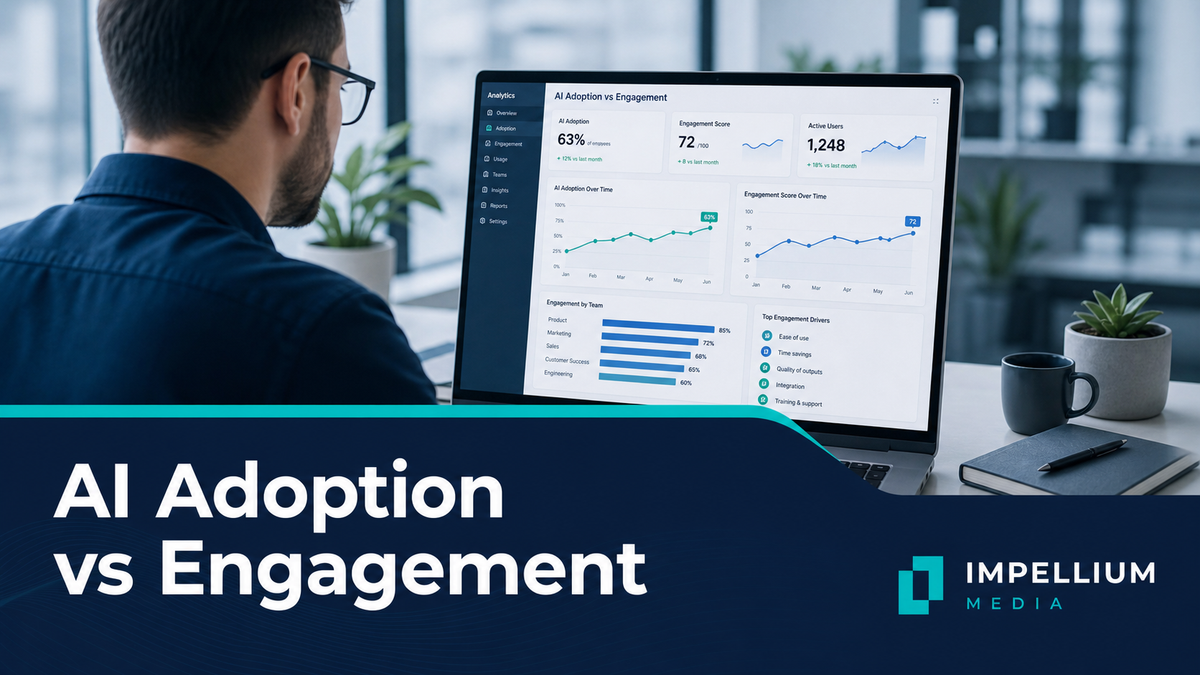
Workers using AI tools for even a small share of their hours are reporting the highest individual productivity gains. Yet employee engagement remains surprisingly low. This the central problem facing every workplace leader in 2026.
This data comes from ActivTrak's 2026 State of the Workplace report, which found measurable productivity improvement among AI tool users. Meanwhile, Gallup's parallel engagement data continues to show weak human motivation scores across the same workforce cohort.
Therefore, productivity (output per hour) is increasing for the workers using AI tools. On the other hand, engagement (motivation, meaning, and discretionary effort) is not following suit. This reveals that organisations are deploying AI successfully to compress task time without doing the equivalent work on the human side: improvements in purpose, recognition, autonomy, and belonging. Gains in efficiency and engagement are not equivalent, and the data suggests we've been neglecting the latter.
Disengaged workers do not sustain productivity. They're more likely to leave, are more prone to error under pressure, and are less likely to extend discretionary effort where AI tools fall short. Productivity gains make the headlines. Disengagement is the liability.
If you manage a team or advise on workplace strategy, the honest question to ask is not "are we seeing AI productivity gains?" — most organisations in 2026 can answer yes. The harder question is: "are we using those productivity gains to invest in sustainable human performance?"
If this reframed the problem for you, your team lead probably needs it too.