
AI boosts junior workers' output—but not their free time
A 2026 WEF report finds 68% of entry-level workers say AI boosts their productivity — but 45% are working longer hours overall. This efficiency gain goes to output, not the worker.

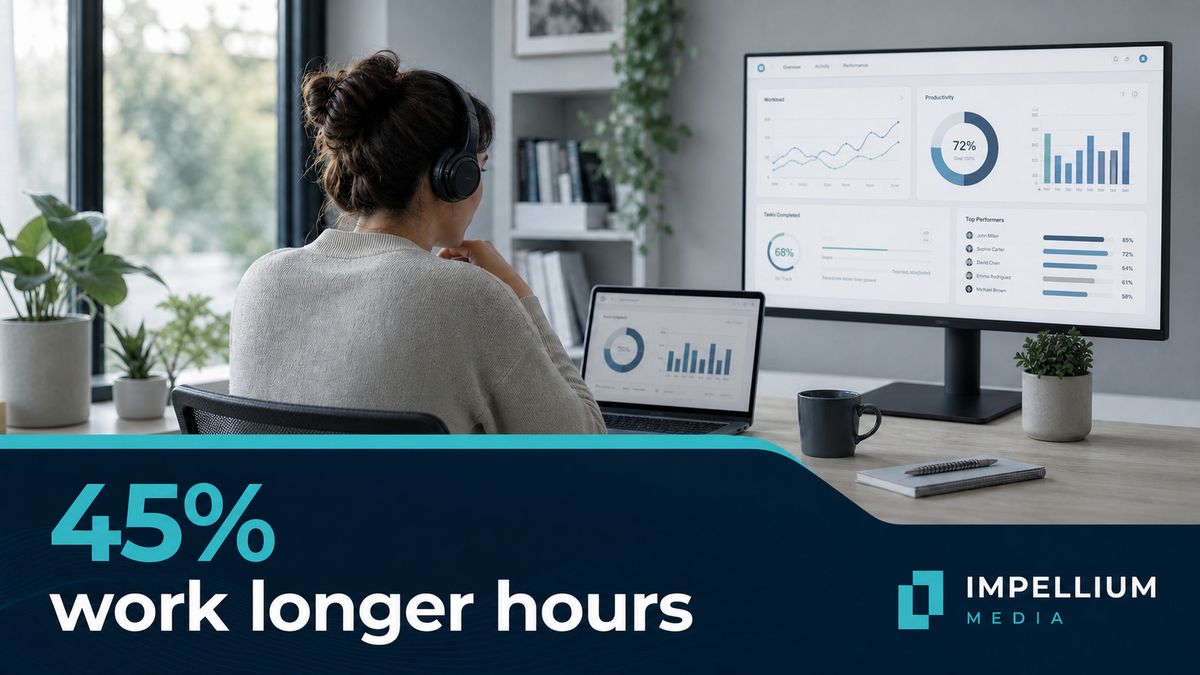
68% of entry-level workers say AI has made them more productive. Yet 45% say they now work longer hours.
This surprising data comes from the World Economic Forum's 2026 report on Artificial Intelligence and the Future of Entry-Level Work. The WEF surveyed entry-level staff across industries and found that productivity gains from AI tools are real and undeniable. What the headlines tend to overlook is that nearly half of the same cohort spends more time working overall.
Therein lies the paradox: AI hasn't compressed the working week for junior staff. It's raised the output and left working hours exactly where they were. In other words, tools make you faster but the institutional response is rarely "great, finish at three." It's "great, here's more." Entry-level workers, who have the least leverage to push back on workload expansion, are absorbing the extra workload. The efficiency gain goes to throughput. The workload remains with the worker.
Therefore, organisations framing AI adoption as an upgrade to wellbeing need to come to terms with this data. If the measurable outcome is more output at the cost of more time, that isn't wellbeing. It's simply workload increase with better tooling. Junior staff who joined the workforce expecting AI to act as a multiplier may find it's functioning more like a ratchet: easy to tighten, hard to loosen.
If you manage entry-level staff using AI tools, the question worth asking isn't whether productivity has improved — it's where the productivity gain is going. If your team is working harder and longer to meet rising expectations, you probably haven't adopted AI as well as you might think.
Share this with a colleague navigating hybrid work.